

What Is Every Pokémon Game in Order and Why It Matters
Every Pokémon Game in Order is the curated sequence of mainline and spin-off releases, sorted by when Game Freak and The Pokémon Company actually shipped them, not by in-universe chronology. The point of this list is not pedantry; it is the cleanest window into how a turn-based RPG went from a monochrome Game Boy cartridge to a 30-hour open-world Switch 2 blockbuster. Once you see the order, you understand why certain features feel outdated and why later titles quietly assume you already know things the earliest games never explained.
Defining the Release Order
Release order is the official launch sequence: Pokémon Red and Green in Japan (1996), then the localized Pokémon Red and Blue, the Pokémon Yellow special edition, and the Pokémon Gold and Silver pair. From there the pattern repeats: paired versions, a third "enhanced" entry (Crystal, Emerald, Platinum), then a remake cycle roughly one console later. According to Digital Trends, treating paired versions as either-or choices is the standard way to cut redundancy without missing exclusives.
Why Chronology Enhances Story Depth
Playing the games in order reveals how the franchise builds on its own lore. Legends: Arceus drops you into the founding era of Sinnoh, but the names and the god-tier creatures only resonate if you have already met Cynthia or heard about Dialga. IGN's chronological guide explicitly recommends starting with Legends: Arceus for anyone who wants the narrative arc to land properly.
How It Guides New Players
Newcomers get the worst possible first impression by booting up Pokémon Red on a dodgy emulator: the type chart is hidden, the menus are punishing, and the balance is rough. A release-ordered list with clear "start here" or "skip this" tags stops new players from burning out on a 1996 quirk before they ever see what the series became.
Definition: Paired versions are two simultaneously released games (e.g., Pokémon Red and Blue) where each contains exclusive Pokémon and items, originally designed to drive local trading between two players or two cartridges.
2026 Pokémon : Why Playing in Order Still Rocks
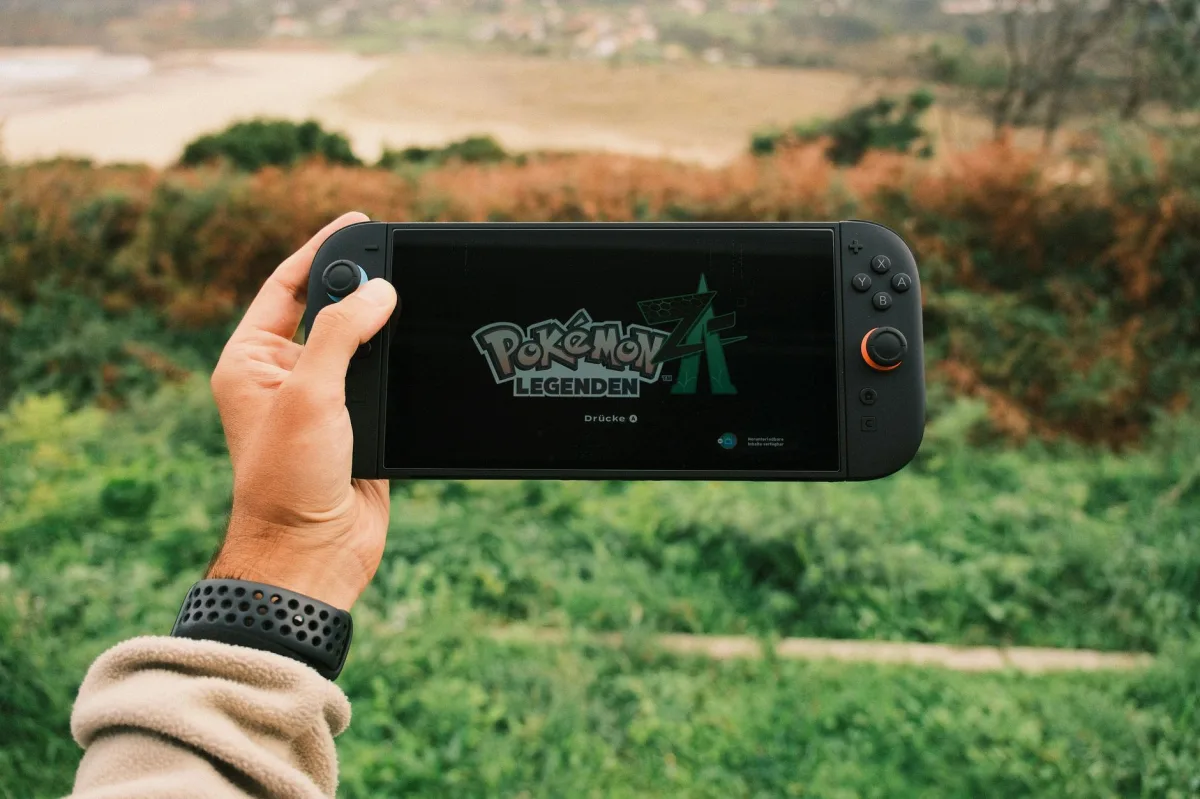
Thirty years in, the series is not slowing down. Pokémon Scarlet and Violet sit comfortably on the Switch 2 with backward compatibility patches, Legends: Z-A is filling out the Gen 3 era with an open-world twist, and Pokémon Pokopia has joined the 2026 release calendar. Playing in order is still the most efficient way to see which 2026 features trace back to which 1996 mechanic.
Current Generation Innovations
The Switch era added real-time open exploration (Wild Areas, the Paldea biomes), full character customization, and co-op raids. These features did not appear from thin air. They are the direct descendants of the tall-grass random encounters in Pokémon Red and the dual-screen interactivity of Pokémon Diamond and Pearl. If you start with the latest title, the older games feel like a downgrade; if you start in 1996, the 2026 entries feel like a payoff.
Community and Competitive Scene
The competitive scene in 2026 runs on Pokémon Scarlet and Violet for VGC, with Pokémon Unite and Pokémon TCG Pocket feeding the casual side. Knowing how Dynamax, Terastallization, and Mega Evolution were introduced helps you read the current metagame instead of memorizing matchup charts. Long-time VGC players will tell you that the 2026 meta still punishes players who skipped older generations and never learned how switching, hazards, or even basic type coverage evolved.
Preserving Legacy in the Digital Age
The Pokémon Company has been quietly archiving the series. Pokémon Home links 3DS, Switch, and now Switch 2 saves, and Nintendo Switch Online has carried the classic Game Boy library for years. The 2026 ecosystem makes a release-ordered playthrough cheaper than ever, because you no longer need to hunt down a dusty Atomic Purple Game Boy Color to play Crystal.
What You Need to Start Your 2026 Pokémon Journey
You can complete a release-ordered run in 2026 with surprisingly little hardware. The realistic setup is one current Nintendo console plus a subscription, a Pokémon Home account, and a checklist.
Hardware & Platforms
Mainline games from Pokémon Red through Pokémon Platinum require original handhelds (Game Boy, Game Boy Color, Game Boy Advance, DS) or the Nintendo Switch Online + Expansion Pack tier, which streams many of the older titles. Everything from Pokémon X and Y onward requires a Nintendo 3DS or a Nintendo Switch. The 2026 titles, including Pokémon Pokopia and Legends: Z-A, target the Switch 2 natively.
Digital vs Physical Copies
Digital copies via the eShop are easier to swap between systems, but used physical cartridges hold value better and let you actually lend games. For a release-order run, digital is the lowest-friction option because you avoid region-locked cartridge quirks, especially with Japanese-only releases like Pocket Monsters Green.
Account & Network Requirements
You need a Nintendo Account, a Pokémon Home subscription for cloud transfers, and a stable internet connection for trading and ranked play. Skip any of these and your post-game Pokédex will be stuck behind a wall of compatibility gaps you cannot climb.
The Original Generation: 1996–2000 – Red, Blue, Yellow, Gold, Silver, Crystal

The original Game Boy era is the foundation. Pokémon Red and Green launched in Japan in 1996, with Pokémon Red and Blue bringing the region to the West in 1998. Pokémon Yellow followed in 1999, then the second generation, Pokémon Gold and Silver, dropped in late 1999 in Japan and 2000 everywhere else, closing the era with Pokémon Crystal.
Game Boy Era Mechanics
These games introduced the turn-based battle system, the type chart, the 151 (then 251) Pokédex, and the trade-evolution mechanic. MissingNo., the famous glitch creature, only exists because of how Pokémon Red and Blue handled encounter data. It is not part of the canon, but it is a useful cultural marker for how raw the original code was.
Regional Variants and Lore
Pokémon Gold and Silver added a real time-of-day system, breeding, held items, and a second region (Johto) that you traverse after clearing Kanto. Crystal added the first playable female protagonist and a real story about the Legendary Pokémon Suicune. If you skip straight to remakes, you lose the in-game days of the week that gate events and you miss the original "two regions" trick that later remakes recycle.
Collecting the First Pokémon
Generation 1 is also where the Pokédex-as-progress metric was born. Completing the Kanto Pokédex in Red or Blue is brutal because the game does not tell you how to obtain certain trade-evolved Pokémon. That difficulty is part of the historical texture; modern remakes soften it with quality-of-life additions that the originals simply did not have.
Modern Path: Why Starting with the Latest Remakes Adds Clarity
Not everyone wants to suffer through 1996 menus. A "modern path" starts with the most recent faithful remakes, then steps backward to fill in gaps. It is a valid alternative to release order and arguably the better experience for time-poor adults in 2026.
Remake Advantages: Graphics & UI
Pokémon: Let's Go, Pikachu! and Let's Go, Eevee! rebuilt Kanto with Switch-quality visuals, full Pokémon GO integration, and a tidier UI. Pokémon Brilliant Diamond and Shining Pearl did the same for Sinnoh. These are not lazy ports; they are thoughtful visual reboots that keep the maps and the music intact while replacing the worst menu flow with modern design.
Quality-of-Life Improvements
Modern remakes add features the originals lacked: the physical/special split, reusable TMs, better inventory management, and the Exp. Candy system that lets you skip the tedious early-game grind. If you are playing in 2026 and your weekly gaming budget is six hours, those improvements matter more than historical purity.
Understanding Design Philosophy
Starting with the latest remakes gives you a baseline of what the series considers "good" today. When you then drop back to the original Game Boy titles, you can pinpoint exactly when each feature was added. This reverse-engineering approach turns the older games into a museum tour rather than a frustration marathon.
Verdict: For 2026 newcomers with a Switch 2, the smartest opening is Pokémon: Let's Go, Pikachu! or Let's Go, Eevee!, then Pokémon Brilliant Diamond or Shining Pearl. You get two generations of modernized content before touching the original hardware.
Beyond the Core: How to Fit Trading Card, Mystery Dungeon, and Other Titles
The core RPG series is only one slice of Pokémon. Spin-offs include the Pokémon Trading Card Game, Pokémon Mystery Dungeon, Pokémon Snap, Pokémon Stadium, Pokémon Colosseum, Pokémon GO, Pokémon Quest, Pokémon Café ReMix, Pokémon Unite, and Pokémon Pokopia. Treating them as optional will make your run feel incomplete; treating them as required will burn you out by spring.
Pokémon TCG Integration
The Pokémon Trading Card Game launched in 1996 alongside the video games and in 2026 lives on through Pokémon TCG Pocket. The mobile version gives you two free packs a day, prebuilt decks, and AI battles that teach fundamentals before you face real players. Skipping the TCG side means missing the in-game TCG minigames in Pokémon Card GB and the design DNA shared between the video and cardboard games.
Mystery Dungeon Series Overview
Pokémon Mystery Dungeon: Rescue Team (2005) and Explorers of Sky (2009) flipped the camera, made you play as a Pokémon, and built a roguelike structure. The 2020 remake, Pokémon Mystery Dungeon: Rescue Team DX by Spike Chunsoft, modernized the original pair for Switch. Playing even one Mystery Dungeon title gives you a fresh view of the series' combat and storytelling potential.
Other Spin-Offs to Consider
Pokémon Snap (1999) and New Pokémon Snap (2021) are photography games, while Pokémon Stadium (1999) and Pokkén Tournament DX brought 3D battling to home consoles. Pokémon GO is the augmented-reality mobile game that revived the franchise in 2016 and still runs strong in 2026 with seasonal events. Pokémon Quest is a free-to-play cube-style spin-off, and Pokémon Café ReMix is a puzzle game where you serve drinks to Pokémon. Drop one or two into your rotation, but do not try to finish all of them in one year.
From 8-bit to 3D: How Mechanics Changed Over Time
The series' mechanical evolution is one of the cleanest case studies in gaming. Each generation added one or two systems that the next generation had to balance around.
Battle System Evolution
Generation 1 had a confused special stat that combined offense and defense. Generation 2 split it into Special Attack and Special Defense. Generation 4 introduced the physical/special split by move type, which is the foundation of modern competitive play. Generation 6 added Mega Evolution, Generation 7 added Z-Moves, Generation 8 introduced Dynamax and Gigantamax, and Generation 9 added Terastallization. Each addition rotated the meta and forced older teams to adapt.
Graphics & Audio Progression
Pokémon Red and Blue were monochrome with red-tinted trading compatibility. The Atomic Purple Game Boy Color finally gave us actual green grass. Gen 3 moved to the GBA and added proper sprite animation. Gen 4 added dual-screen maps on the DS. Gen 5 went full sprite on the DS with detailed Pokémon animations. Gen 6 made the jump to 3D on the 3DS. Gen 7 added fully 3D overworld exploration. Gen 8 and 9 delivered real-time open worlds on Switch and Switch 2.
Player-Friendly Features
The most underrated evolution is usability. Poké Balls now stack. TM machines are reusable. The box system is one tap. Shiny hunting got easier with chain catches, and the Exp. Candy system plus bottle caps that max out IVs lets competitive players skip the random-number grind. Modern titles also include accessibility features, such as color-blind modes and simplified controls in Pokémon: Let's Go, Pikachu! and Let's Go, Eevee!, that the 1996 titles could not even imagine.
Optimizing Your Playthrough: Tips, Tricks, and Order Variants
There is no single correct path, only the path that matches your hardware, your time, and your tolerance for old-school menus. Pick a variant and stick to it.
Classic vs Modern Order
Classic release order means Red/Blue → Yellow → Gold/Silver → Crystal → Ruby/Sapphire → Emerald → FireRed/LeafGreen, and so on. Modern order means starting with the most recent remakes and working backward. Digital Trends recommends focusing on the strongest or most accessible entries first if you do not care about historical completeness.
Using Trading & Interconnectivity
Paired versions are designed around trading. Each version has exclusives, so you either need a friend with the other copy or you need to use online services like the GTS in older titles or the surprise trade in modern Switch games. Pokémon Home is the bridge that lets you move creatures from Game Boy-era Virtual Console releases all the way to Scarlet and Violet, though some legacy Pokémon require specific conditions to transfer.
Time-Saving Strategies
Mainline titles run 30 to 60 hours for the main story. Completionist runs can stretch past 100 hours. Use a checklist, skip the Battle Frontier unless you love it, and let the modern remakes carry the historical weight. Treat the original releases as museum visits, not as your first date with the franchise.
Avoid These Pitfalls When Navigating the Pokémon Timeline
Most people who abandon a chronological run do not run out of time; they run into avoidable mistakes. Here are the three traps I see every year.
Skipping Key Story Elements
If you skip Pokémon Diamond and Pearl and jump into Legends: Arceus, the "ancient Sinnoh" setup makes no sense. The same problem hits anyone who skips Ruby and Sapphire before playing Pokémon Colosseum or XD. Each pair of games references the previous generation, sometimes directly, sometimes as a background joke.
Missing Out on Legacy Features
Some features only existed in one generation. The Pokémon Walker came with Pokémon HeartGold and SoulSilver, the Dream World came with Pokémon Black and White, and the PokéPelago was a Gen 7 post-game feature. Skipping those titles means missing the era when those mechanics defined the community.
Compatibility Issues
Not every Pokémon can move forward. Some event-only creatures from older games require specific transfer tools, and a few mythical Pokémon are locked behind distributions that no longer run. Check the current Pokémon Home compatibility list before you assume your favorites can follow you through the whole run.
Playstyle Personas: Which Path Suits You
Your hardware, schedule, and nostalgia tolerance decide which path actually works. Below is the persona matchup I recommend for 2026 players.
| Target Persona | Recommended Option | Key Reason & Real-World Benefit |
|---|---|---|
| Newcomers & Remake Fans | Pokémon: Let's Go, Pikachu! or Let's Go, Eevee!, then Pokémon Brilliant Diamond or Shining Pearl | Modern UI, color-blind modes, and Pokémon GO-style catching cut the learning curve in half. |
| Completionists & Original Hardware Fans | Release order from Pokémon Red and Blue through Pokémon Scarlet and Violet | Preserves the original difficulty curve and lets you catch unobtainable event Pokémon in their prime. |
| Competitive Players | Pokémon Scarlet and Violet (VGC), Pokémon Unite, Pokémon TCG Pocket | These are the only 2026 entries with active ranked ladders and serious tournament support. |
| Busy Adults | Modern path plus one spin-off (Mystery Dungeon: Rescue Team DX or Pokémon Café ReMix) | Hits the high points without the 200-hour commitment of a full release-order run. |
New Players & Remakes
Pair Pokémon: Let's Go, Pikachu! with Pokémon Brilliant Diamond or Shining Pearl. Both pairs are on Switch, both include modern accessibility, and together they cover Gen 1 and Gen 4. After that, branch into Pokémon Sword or Shield for the Wild Area open-world experiment.
Completionists & Original Games
Pick up a used Game Boy Advance or DS, find original cartridges, and play in order. Add Pokémon Stadium and Pokémon Colosseum for console-era context. The cost is higher, but the texture of the original sprites and the original menu sounds is the reward.
Competitive Players & Modern Titles
Stay in the current generation. The 2026 VGC circuit runs on Pokémon Scarlet and Violet, and Pokémon Unite plus Pokémon TCG Pocket offer ranked play on phones. Your time is better spent learning the meta than replaying 2002.
People Also Ask About Pokémon Game Order
Can I Play in Any Order?
Yes, but expect callbacks to land flat. Every modern Pokémon game assumes you already know the basic types, the evolution rules, and the legendary tradition. New players who jump into Scarlet and Violet first can still enjoy the open world, but the historical jokes, the Cynthia cameo, and the in-game Pokédex lore will read as flavor text instead of fan service.
Do Remakes Replace Originals?
For most players, yes. Pokémon: Let's Go, Pikachu! and Let's Go, Eevee! cover the Pokémon Red and Blue experience with better graphics and modern quality-of-life features. Pokémon Brilliant Diamond and Shining Pearl do the same for Pokémon Diamond and Pearl. The originals still matter for collectors, glitch hunters, and historians, but they are not required to enjoy the modern series.
How to Trade Across Generations
You trade through Pokémon Bank (for 3DS titles) and Pokémon Home (for Switch and Switch 2 titles). You cannot trade directly between a Game Boy cartridge and a Switch game; you need a Virtual Console release on 3DS, a Bank upload, then a Home download. Some mythical Pokémon are restricted, so always check the latest Home compatibility list before planning a transfer.
Definition: Base Stat Total (BST) is the sum of a Pokémon's six core stats, used as a quick gauge of overall power. Modern competitive players use IVs (Individual Values) and EVs to fine-tune within that range.
Your 2026 Every Pokémon Game in Order: The Ultimate Guide
Walking through Every Pokémon Game in Order in 2026 is the cleanest way to understand why a 30-year-old Game Boy RPG still sets the design template for half the games on store shelves. Pick a path, lock in your hardware, and protect your time.
Recap of Key Takeaways
- Release order is the historical default; modern remakes are the time-saving default.
- You need a Game Boy or Virtual Console for Gen 1–2, a 3DS or Switch Online for Gen 3–4, and a Switch or Switch 2 for Gen 5–9 plus the 2026 lineup.
- Trade exclusives between paired versions, and use Pokémon Home to bridge generations.
- Pick one or two spin-offs; do not try to finish the whole franchise in a single year.
Next Steps & Resources
Bookmark the Digital Trends order list and the IGN chronological guide for cross-referencing. Build your save backup routine before you start, and set a realistic cap of one mainline title per month.
Staying Updated in 2026
The 2026 calendar is dense: Pokémon Pokopia, Legends: Z-A updates, Scarlet and Violet ranked seasons, and the next Pokémon TCG Pocket expansion. Follow the official Pokémon social channels and your local competitive Discord to track event distributions and Home compatibility changes as they ship. That way, your release-order run stays current without becoming a second job.