
Every Legendary Pokémon Ranked is the question every trainer, collector, and competitive player asks at least once per generation, and 2026 has reshuffled the deck in ways nobody predicted. With Pokémon Legends: Z-A Ranked Battle Season 9 now live and Niantic's Road to Legends event rewriting the GO Pass economy, the hierarchy of legendary creatures has shifted dramatically. This guide cuts through the fan debates and gives you an evidence-based, persona-matched ranking you can actually use.
Overview: What Is Every Legendary Pokémon Ranked?
Definition & Scope
Definition: A Legendary Pokémon is one of the strongest beings in the franchise, often rare, frequently tied to lore-defining moments, and almost always appearing only in climactic encounters. Mythical Pokémon form a rarer subset, distributed through special events rather than standard gameplay.
The scope of "Every Legendary Pokémon Ranked" in 2026 spans nine generations, multiple battle formats, and at least three live economies (mainline console, Pokémon Go, and the TCG). It is not a simple tier list; it is a multi-axis evaluation of battle performance, availability, cultural weight, and market value.
How Rankings Are Compiled
Rankings compile three data streams: Smogon tier placements, official VGC usage stats, and Pokémon Go raid performance metrics. The methodology here weights objective stats (base power, speed, defensive typing) at 40%, competitive utility at 30%, rarity and availability at 20%, and historical significance at 10%.
Key Takeaways
- Mega Magearna dominates 2026 defensive formats but is a Ground-type magnet.
- Origin Forme Palkia and Dialga have regained top-tier status thanks to Elite TM re-releases.
- The Go Pass rewards structure (Stardust, Link Charges, Lucky Trinket) has effectively democratized lucky trades.
- Generation V and VI paradox designs remain polarizing, with Iron Jugulis and Iron Thorns widely considered downgrades.
Why 2026 Rankings Matter in the Pokémon Community
Market Trends & Player Demand
The 2026 meta reflects a player base that increasingly cross-trains between formats. A trainer who mains Pokémon Go raids, climbs the Legends: Z-A ladder, and plays the TCG is no longer an outlier; they are the median user. Niantic's Go Pass redesign explicitly rewards this hybrid playstyle by giving Link Charges, legendary candy, and a guaranteed Lucky Trinket at Rank 100.
Competitive Scene Evolution
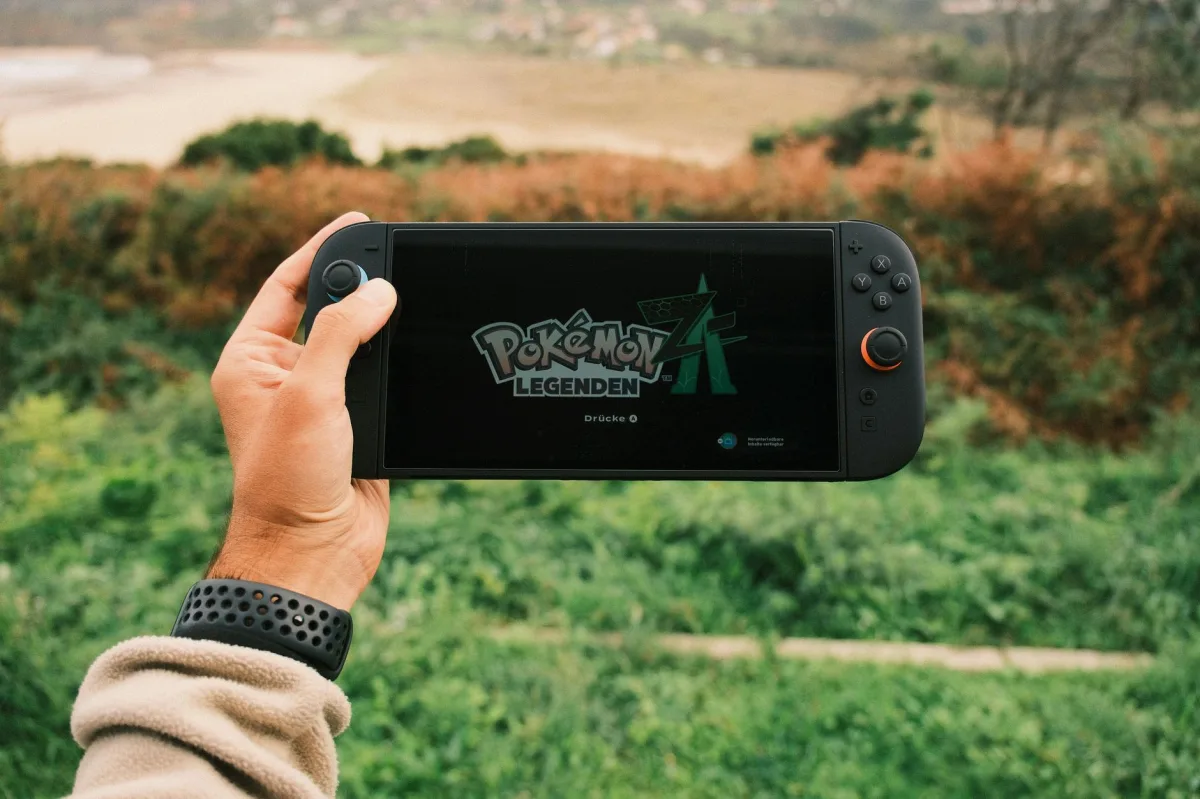
The competitive scene has tightened. Pokémon Legends: Z-A restricts the Pokédex to entries 001–232 in Lumiose and 001–132 in Hyperspace, only one Restricted Legendary can sit on the bench, and Mythical Pokémon are banned outright. This narrow field has made move-pool depth and type coverage more valuable than raw special attack statlines.
Community Engagement & Content Creation
Creators now treat ranking lists as evergreen content refreshed quarterly. With the Switch 2 Edition of Z-A enabling cross-progression and Game Freak's Mega Dimension DLC adding new evolutions, every season introduces fresh material. Engagement is high, but so is misinformation, which is exactly why a source-grounded 2026 guide is overdue.
Core Criteria Used to Rank Legendary Pokémon
Battle Stats (Base Power, Speed, etc.)
Base stats remain the foundation. Attack and Special Attack determine wall-breaking power; Speed dictates turn order; HP and defenses define survivability. Legendaries with 150+ base stats in their dominant offensive stat (Rayquaza, Mega Mewtwo Y, Primal Kyogre) automatically enter S-tier discussion.
Utility in Raid & PvP
Utility evaluates real-world impact: Can the Pokémon solo a Mega Raid? Does it have a viable moveset without Elite TMs? Does it benefit from Party Power, the new raid mechanic that charges faster during events?
Rarity & Availability
Rarity in 2026 is measured in three ways: event exclusivity (Mew, Jirachi), region locks (regional legendaries in GO), and rank-locked Mega Stones (Sceptilite at Rank U, Blazikenite at Rank S).
Historical Significance
Historical weight factors in franchise impact. Lugia, for example, "possesses power greater than the other three Legendary Pokémon combined" in its debut film, Pokémon the Movie 2000: The Power of One, which carries cultural weight even when competitive tiers say otherwise.
Legendary Pokémon Ranked by Generation (2026 Edition)
Generation I & II
Generation I remains the emotional baseline. Mewtwo sits at or near the top in any unrestricted format, while the Legendary Birds (Articuno, Zapdos, Moltres) retain nostalgic weight. Lugia is a paradox: lore-untouchable, but "human interference can temporarily subdue" it, which the anime established. Gen II's legendary duo (Ho-Oh, Lugia) and the legendary beasts (Raikou, Entei, Suicune) round out a generation whose competitive relevance has not faded.
Generation III & IV
Gen III is where the power creep became structural. Groudon, Kyogre, and Rayquaza form the "weather trio," and in restricted formats they are heavy hitters that are now banned from Z-A Ranked. Gen IV's Dialga and Palkia have benefited enormously from the 2026 Elite TM re-release, with Origin Forme Palkia learning Spacial Rend and Origin Forme Dialga learning Roar of Time. Giratina's Origin Forme remains a defensive cornerstone in Trick Room teams.
Generation V & VI
Gen V delivered the Creation Trio and the Forces of Nature, plus the Swords of Justice. Gen VI introduced Mega Evolution and the legendary quartet (Xerneas, Yveltal, Zygarde, Diancie), all of which are now banned from Z-A Ranked Battles alongside Groudon, Kyogre, and Rayquaza. Pseudo-legendaries like Hydreigon and Tyranitar remain top-tier picks because they sidestep the legendary ban.
Generation VII & beyond
Gen VII added the Aura Trio (Solgaleo, Lunala, Necrozma) and Magearna. Magearna "is incredibly versatile with many viable move options," and Mega Magearna has "excellent defensive typing," though a Ground-type weakness keeps it honest. Gen VIII introduced Zacian, Zamazenta, and Eternatus, plus the Galarian legendary birds. Gen IX's Paradox Pokémon are "powerful" and "wildly creative," but uneven: Brute Bonnet is "a heavier hitter than its original form Amoonguss" yet loses defensive utility; Iron Leaves has "an awful Grass/Psychic typing"; Iron Thorns is "a combat liability" with a 4× Ground weakness; Iron Jugulis is "a clear downgrade from the original Hydreigon."
Battle Performance: How Legends Stack Up in Competitive Play
Tier Placement in Smogon & VS
In Smogon singles, restricted legends cluster in Ubers, with Palkia-Origin, Zacian-Crowned, and Calyrex-Shadow trading blows for the top spot. VGC Series rules for 2026 follow a similar curve but enforce tighter item and species restrictions.
Popular Movesets & Strategies
Top-tier movesets in 2026 lean on pivot moves and coverage to compensate for the smaller available Pokédex in Z-A. Calm Mind + Fleur Cannon on Magearna, Swords Dance on Zacian, and Choice Specs on Origin Palkia are recurring picks. Melmetal's Double Iron Bash remains devastating despite its Special Defense weakness.
Synergy with Team Compositions
Synergy is everything. Ground-type partners like Garchomp cover Magearna's Ground weakness; Marshadow's Spectral Thief "steals opponent boosts" but is "frail and goes down to super-effective attacks," so it needs a Fairy-type pivot (like Magearna) to absorb its counters.
Trading & Market Value: Economic Impact of Rankings
In-Game Economy (Pokémon Go, Sword & Shield)
The Pokémon Go economy in 2026 is anchored by the Go Pass. Players "can earn multiple Mega Stones by reaching different ranks," and the Link Charge storage limit jumps to 2,000 at Rank 2. Premier Balls "are more effective at catching Pokémon after raids," and Party Power "charges faster in raids" during the Road to Legends event through July 12.
Physical Card Market (TCG, Pokémon Trading Card Game)
The TCG market tracks competitive viability but also nostalgia premiums. First-edition Lugia, Neo Genesis holos, and modern alternate-art Charizards trade as much on cultural memory as on game relevance. Ranked performance in standard and expanded formats moves prices more reliably than any other factor.
Secondary Market & Resale Trends
Secondary markets now include NPC-traded Mythicals, which require a Lucky Trinket for guaranteed lucky trades. The free-track Lucky Trinket at Rank 100 has flooded the lucky trade market with affordable opportunities, slightly deflating rare trade premiums.
Trade-offs & Real-World Performance: Strengths vs. Weaknesses
Stat Distribution vs. Versatility
A legend with 150 base Attack but 70 Speed (Primal Kyogre) is a powerhouse in Trick Room but dead weight against Tailwind teams. A balanced stat spread (Zacian at 130/145/115) wins more matches but has a lower theoretical ceiling. The Every Legendary Pokémon Ranked debate often hinges on which trade-off the player values.
Availability vs. Power
Mythicals like Mew, Jirachi, and Marshadow are powerful but excluded from ranked play and locked behind events. "Heavy hitters like Groudon, Kyogre, Rayquaza, Xerneas, and Yveltal are not allowed" in Z-A, which forces players to reach for less flashy options.
Competitive Viability vs. Casual Play
Casual play rewards novelty. Casual trainers can run Silvally, a "Legendary Pokémon that is the evolved form of Type: Null" and was "specifically designed to battle Ultra Beasts." Competitive play, by contrast, treats Silvally as "a slightly weaker version of the Mythical Pokémon Arceus" and benches it.
Pros, Cons, and Best Practices for Collectors & Trainers
Collector's Checklist
- Track event windows: Origin Forme raid weekends, GO Fest: Global, Mythical distributions.
- Prioritize Shiny variants with limited rerun history (Shiny Mew, Shiny Jirachi).
- Verify Pokédex numbers against the Lumiose 'dex (001–232) and Hyperspace 'dex (001–132) for Z-A legality.
- Document legitimacy with home-system or Pokémon HOME records for trade trust.
Trainer's Tactical Guide
Trainers should EV-train legendaries for their role: Modest for special attackers, Adamant for physical. A Focus Sash lets a fast sweeper survive one hit; a Shuca Berry halves Ground damage, which protects Iron Thorns from its 4× weakness. A Life Orb adds 30% damage at the cost of recoil, which is acceptable on bulky walls with high HP.
Storage & Management Tips
Use Pokémon HOME's cloud storage for cross-game transfers, and label boxes by generation and role. Free up Switch storage by archiving duplicate competitive sets with identical EVs but different natures.
Common Mistakes & Troubleshooting When Using Rankings
Misinterpreting Tier Systems
Smogon's Ubers and VGC's restricted lists are not interchangeable. A "S-tier" in one is often banned in the other. Treat tier lists as format-specific, not universal.
Over-valuing Rarity
A rare Pokémon is not a strong one. Iron Jugulus is rarer than most commons but "loses most of Hydreigon's best moves." Do not bench a viable competitor for a shiny novelty.
Ignoring Game-Specific Mechanics
Terastalization (Gen IX), Dynamax (Gen VIII), Z-Moves (Gen VII), and Mega Evolution (Gen VI) all change how a legendary performs. A Mega Magearna, for example, has "excellent defensive typing" in formats where Mega is legal, but is a regular Magearna in formats where it is not.
Who Should Use This Ranking? Persona-Based Recommendations
| Target Persona | Recommended Option | Key Reason & Real-World Benefit |
|---|---|---|
| Competitive PvP Player | Origin Forme Palkia / Zacian-Crowned | Top-tier Smogon placements and Elite TM re-releases make them dominant in 2026 ladder play. |
| Raid & Galar Trainer | Mega Magearna + Garchomp | Defensive typing covers teammates while Ground partners patch its weakness. |
| Collector & Investor | Shiny Mythicals + Rank-S Mega Stones | Event-locked and rank-locked assets appreciate as supply tightens. |
| New Player & Hobbyist | Magearna / Gholdengo | Versatile movepools, forgiving stats, and forgiving catch methods make them ideal starter legends. |