
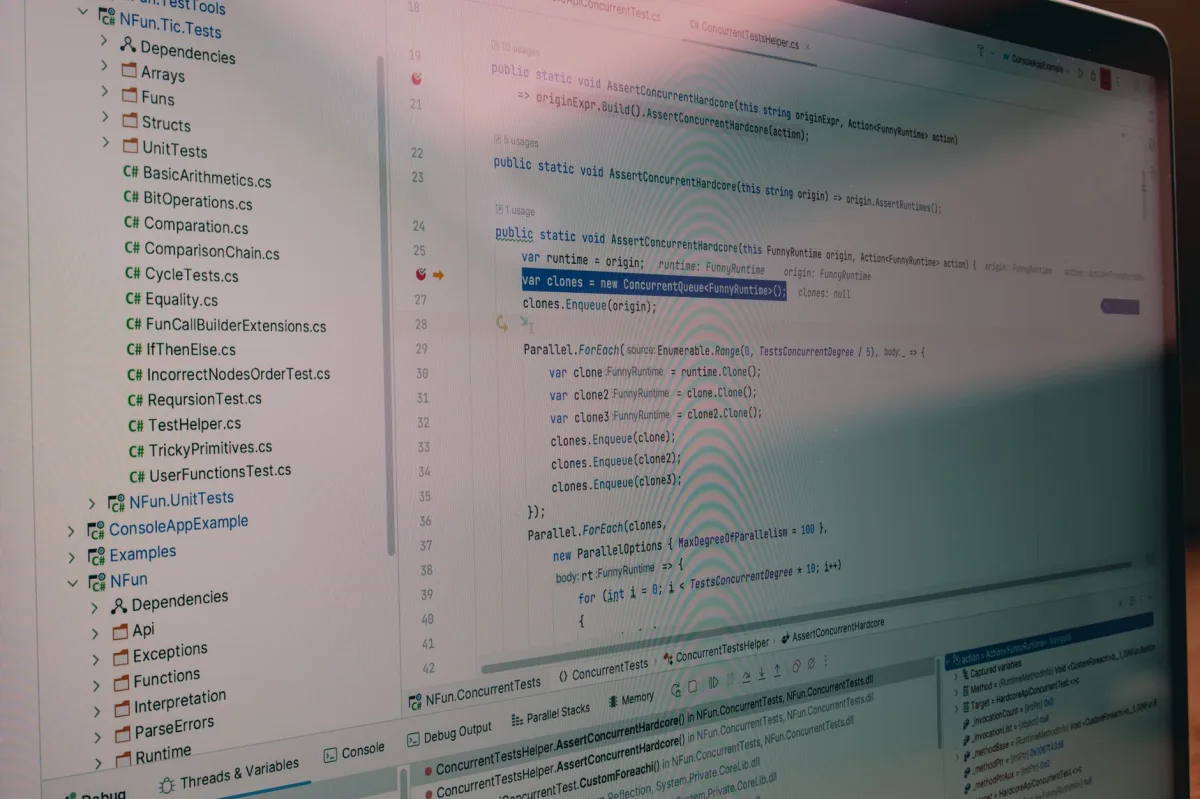
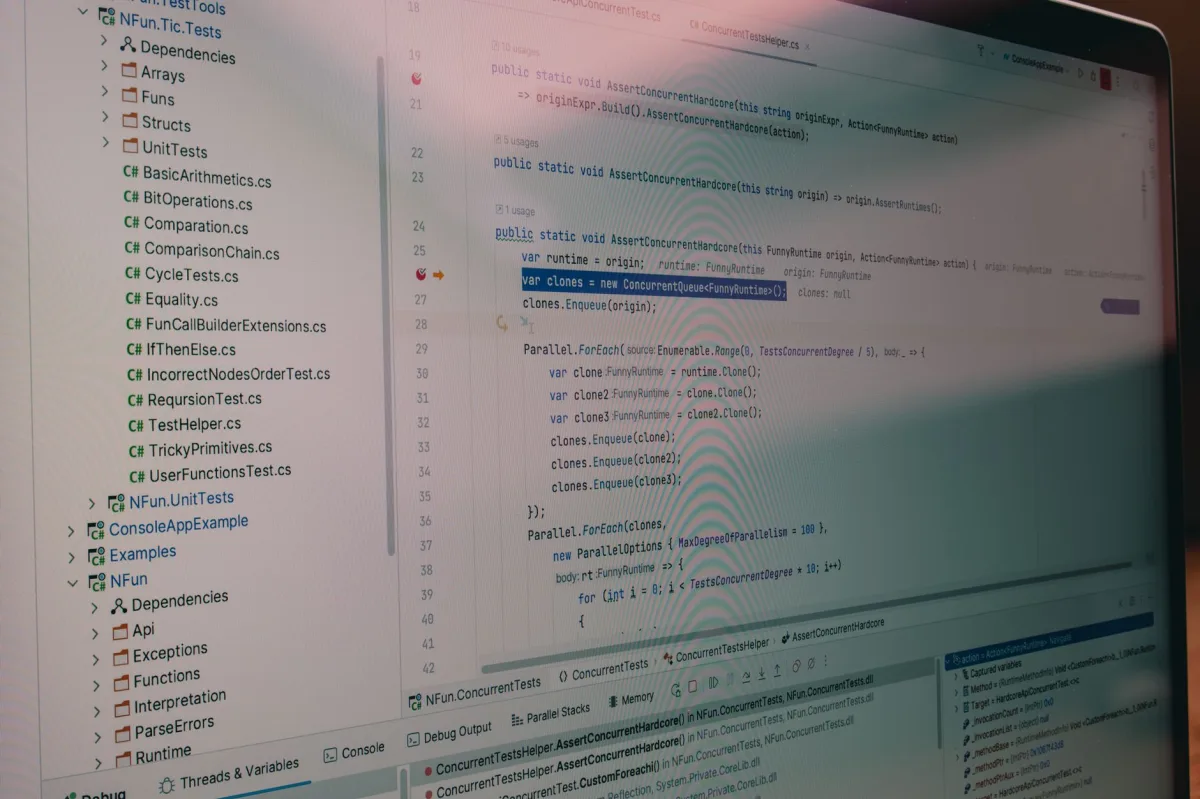
The Laravel Application Lifecycle is the deterministic sequence your code follows from the moment a web server hands PHP a request until the response leaves the server and queued listeners clean up afterward. If you have ever wondered why middleware fires before a controller, or why a job dispatched from a controller can outlive the HTTP request, the answer lives in that sequence. Mastering the Laravel Application Lifecycle in 2026 means you can predict memory pressure, debug production stalls, and tune queues with surgical precision instead of guesswork.
Overview & Core Answer
What is the Laravel Application Lifecycle?
Laravel's lifecycle is the entire execution envelope between an incoming HTTP request and the closure of the worker that handled it. It is not a single function. It is a coordinated set of bootstrap files, service container bindings, middleware pipes, route resolution, controller execution, and post-response hooks. When the framework boots for a web request, the public/index.php entry point pulls in the autoloader, instantiates the application, registers core providers, dispatches the kernel, runs the global and route middleware, executes the matched controller or closure, and finally fires terminable middleware plus any registered terminating callbacks.
Definition: The Laravel Application Lifecycle is the ordered chain of phases (load autoloader, bootstrap providers, handle request, send response, terminate) that a Laravel application executes for each request, job, or command.
Key Milestones in a Request Cycle
Every request hits the same six checkpoints:
- Autoload resolution via Composer's autoloader, which loads the framework, the app, and any registered
autoloader.filesentries. - Bootstrap phase where the HTTP kernel creates the application instance and registers configuration, exception handling, facades, and service providers.
- Service provider registration, including third-party providers from Packagist packages.
- Middleware execution, split into global middleware and route middleware groups.
- Controller dispatch and response build, where the router matches the route and invokes the action.
- Termination, where Laravel flushes session data, fires terminating middleware, and lets any deferred services finalize.
Knowing these checkpoints lets you place logging, telemetry, or rate limiting exactly where it costs the least and observes the most.
Why It Matters in 2026: Trends & Business Impact
Serverless Adoption & Laravel's Edge
Serverless platforms and edge runtimes have flipped the old assumption that a long-lived PHP-FPM worker always handles your traffic. In 2026, teams ship Laravel to AWS Lambda, Laravel Vapor, and Cloudflare Workers using custom runtimes. The lifecycle still applies, but the cold start cost sits in bootstrap time. Service provider count, package count, and config cache size now directly drive your first-request latency. Lean providers equal faster cold starts.
Security & Compliance in 2026
Supply-chain attacks against Composer packages have made lifecycle auditing a board-level concern. A single malicious autoloader.files entry can hand an attacker your CI/CD tokens, SSH material, or cloud secrets. According to a recent Laravel News roundup, the laravel-lang family of packages was targeted by a credential stealer that piggybacked on legitimate versions. The lifecycle response is clear: lock Composer with composer audit, pin exact versions, and inspect every autoloader file before deploying.
Performance Demands of Modern UIs
Live dashboards, AI-driven search, and collaborative editing have moved WebSockets into the core experience layer. Laravel Reverb, the framework's first-party WebSocket server, now lives in the same lifecycle conversation as your HTTP routes. LaraOwl, a self-hosted monitoring project built on Laravel, is one example of how Reverb and the queue system feed the same real-time dashboard that developers watch during incidents.
Prerequisites & Environment Setup
PHP & Composer Versions
For Laravel 13 (the current LTS line in 2026), PHP 8.3 is the floor and 8.4 is the recommended target. Composer 2.7 ships with faster parallel downloads and a stricter lockfile resolver, which matters when you have hundreds of transitive dependencies. Always install Composer from the official installer, not a system package, so signature verification works.
Database & Filesystem Drivers
Laravel 13 supports MySQL 8, PostgreSQL 16, SQLite 3.45, and SQL Server 2022 out of the box. For the filesystem, configure your S3 disk, local disk, and any S3-compatible storage such as Cloudflare R2. The new storage cache driver introduced in Laravel 13.10.0 lets you use any disk as a key/value cache, so a small team can skip Redis entirely during early development.
Essential Packages (laravel-lang/lang, http-statuses, attributes, actions)
The laravel-lang family delivers community-maintained translations, HTTP status constants, attribute helpers, and action invokers. Pin them through Composer and audit the lockfile on every build. These packages run during the bootstrap phase, so a misbehaving translator can stall every request.
Bootstrapping the Lifecycle: Composer, Packagist, GitHub
Creating a New Laravel Project
The standard install command boots a fresh project with a working .env, generated key, and default migrations:
composer create-project laravel/laravel my-app
cd my-app
cp .env.example .env
php artisan key:generate
php artisan migrate
npm install && npm run build
If you are standing up a self-hosted monitoring tool like LaraOwl, the same skeleton becomes the telemetry collector. The server process is just another Laravel app, with php artisan queue:work, php artisan reverb:start, and php artisan schedule:work handling background duties.
Managing Dependencies with Composer
Treat your composer.json as production code. Lock every package to an exact version for deploys, and use caret ranges only in feature branches. Run composer audit in CI to catch advisories before merge. When a credential stealer hides inside an autoloader.files entry, only a tight lockfile plus a diff review will catch it.
Leveraging GitHub Actions for CI
A minimal CI pipeline that exercises the lifecycle looks like this:
- Spin up PHP 8.4, Node 22, and MySQL 8 service containers.
- Run
composer install --no-interaction --prefer-dist. - Cache the
bootstrap/cachedirectory between runs. - Execute
php artisan testwith parallel testing enabled. - Run
composer auditand fail the build on any medium or higher severity advisory.
This pattern catches lifecycle regressions (a slow boot, a missing provider) before they reach production.
Core Laravel Application Lifecycle Phases: Boot, Request, Response, Termination
Bootstrapping: Service Providers & Facades
Service providers are the most powerful leverage point in the lifecycle. The AppServiceProvider fires first, followed by framework providers, then any third-party providers in the order they appear in config/app.php. Inside register() you bind singletons into the container; inside boot() you can read resolved services. A common pitfall is reading from the container inside register() on another provider, which causes silent null returns and hours of debugging.
Request Handling: Middleware Stack
Middleware wraps every request and response. The global stack in Laravel 13 includes TrimStrings, ConvertEmptyStringsToNull, TrustProxies, and HandleCors by default. Route groups in bootstrap/app.php add web, api, and any custom groups you define. Each middleware can short-circuit the request, mutate it, or pass it down. Heavy middleware (JWT verification, geo lookup) belongs in the route group, not the global stack.
Response Generation: View & JSON
Controllers and closures return a response, a view, or a JsonResponse. The view layer compiles Blade templates, runs them through the rendering pipeline, and emits HTML. JSON responses skip the view step and serialize the payload. Streaming responses (SSE, file downloads) bypass the response cache and write directly to the output buffer, which is why they work for long-lived connections.
Termination: Events & Queue Workers
Termination is where the lifecycle quietly does its most expensive work. Laravel fires the terminating callback list, flushes deferred services, and lets middleware like StartSession persist data. Queue workers run a separate, longer lifecycle: php artisan queue:work loops, calls WorkerStarting, dequeues a job, runs the job's middleware, executes the handle method, fires JobProcessed or JobFailed, and then loops again.
Laravel 13.10.0 added two termination-friendly features. The --stop-when-empty-for=60 flag on php artisan queue:work lets short-lived workers exit when no jobs arrive for 60 seconds, which is ideal for serverless deployments. The WorkerIdle event fires the moment a worker checks a queue and finds it empty, so you can scale down workers aggressively without polling. WorkerOptions are also now passed to additional worker events, giving observers full context about timeouts, memory limits, and connection name.
Feature Comparisons: Laravel 9 vs 10 vs 13 (2026)
Route Caching & Grouping Enhancements
Route caching has been steadily hardened. Laravel 9 introduced the route:cache command, but routes with closures could not be cached. Laravel 10 enabled closure caching, and Laravel 13 ships a more aggressive RouteMatched hook plus nested attribute-based grouping. The net effect in 2026 is a smaller route table footprint and faster cold starts for serverless deploys.
New Queue Workers & WorkerIdle Event
The queue subsystem is where Laravel 13 pulls clearly ahead. The WorkerIdle event, added in 13.10.0, is the missing piece for autoscaling. Teams can now subscribe a listener that reports worker count to a metrics endpoint, then lets the autoscaler kill idle workers within seconds instead of waiting for a heartbeat timeout.
Horizon & Swoole Integration
Horizon continues to be the dashboard for Redis-backed queues, and the official Horizon docs show that Swoole and Octane integration in 13 keep a worker pool resident across requests. That collapses the bootstrap phase cost for the second request onward, which is why Octane-powered apps show much higher throughput in Laravel News benchmarks.
Storage Cache Driver Improvements
Laravel 13.10.0 added the storage cache driver configuration block in config/cache.php, with disk and path keys. The practical win is huge: small apps can use the same S3 disk that hosts user uploads as a slow but durable cache, avoiding Redis or Memcached entirely. Schema::hasForeignKey, another 13.10.0 addition, lets migrations check foreign key existence cleanly, which simplifies zero-downtime deploys.
Real-World Trade-offs & Performance Benchmarks
Cloudflare API & WAF Integration
Pushing WAF rules through the Cloudflare API turns your Laravel app into an active participant in its own perimeter. LaraOwl shows the pattern: detect a credential-stuffing pattern, push a temporary firewall rule, log the action, and revert after a cooldown. The trade-off is API rate limits (Cloudflare allows 1,200 requests per five minutes per user) and a hard dependency on a third-party token.
WebSockets & Laravel Reverb
Laravel Reverb is the right choice for in-app chat, live dashboards, and notification feeds. The trade-off against Node.js is throughput. Node still wins on raw connections per box, but Reverb wins on integration cost: it shares the same container, the same auth, and the same queue as the rest of your app. For most B2B dashboards, that integration win outweighs raw throughput.
Database Choices: MySQL vs PostgreSQL
MySQL 8 is the default for a reason. It is fast, predictable, and well-understood. PostgreSQL 16 is the better choice for teams that lean on JSONB columns, full-text search, or window functions. The lifecycle cost is identical, but the operational cost (replication, backups, monitoring tooling) skews higher for Postgres unless the team already has Postgres expertise.
Benchmark Results (Laravel Nightwatch)
Laravel Nightwatch benchmarks in 2026 show a vanilla Laravel 13 app on PHP 8.4 handling roughly 1,800 simple JSON requests per second on a single Octane worker with 512 MB memory. The same app on PHP-FPM with opcache hits around 600 rps. The bootstrap phase is the dominant cost in both cases, which is why trimming service providers is the highest-leverage optimization.
Verdict: Use Octane for read-heavy APIs with predictable load. Use PHP-FPM for mixed workloads that include long-running jobs and want simpler debugging.
One more trade-off worth highlighting: queue resilience. Fuse for Laravel is a circuit-breaker middleware that sits between your queue workers and a flaky downstream API such as Stripe. When the API fails, Fuse stops dispatching jobs to it, delays them in place, and resumes automatically once the API recovers. The result is zero data loss, no manual 2 AM pages, and queue workers that never spin their wheels on a known-broken endpoint.
Best Practices & Common Pitfalls
Optimizing Middleware Chains
Keep global middleware under six entries. Anything beyond that is a code smell that usually points to a missing route group. Profile each middleware with Laravel Telescope or Nightwatch before shipping; a single bad regex in a custom middleware can cost 15 ms per request.
Handling Long-Running Jobs
Long jobs should chunk work into smaller jobs and use the withoutOverlapping scheduler lock. Set explicit timeouts, log progress, and always emit a heartbeat to an external monitor. The WorkerIdle event and --stop-when-empty-for flag combine nicely with chunked work: workers can exit when the queue empties, and a scheduler tick can re-dispatch if more remains.
Security Hardening (WAF, CSRF)
CSRF protection is on by default for web routes, but stateless APIs and webhook endpoints need explicit guards. Add a WAF layer (Cloudflare, AWS WAF, or a self-hosted ModSecurity) in front of every public endpoint. Rotate API keys quarterly and store them in Vault or AWS Secrets Manager, never in .env files committed to Git.
Avoiding Duplicate Service Providers
Duplicate providers cause double registration, double event listeners, and double memory. Audit config/app.php and every package's service provider on every upgrade. The Composer composer why vendor/package command tells you which other package pulled a transitive dependency, which is often the source of a surprise duplicate.
Who Should Use This Guide? (Personas Table)
| Target Persona | Recommended Option | Key Reason & Real-World Benefit |
|---|---|---|
| Solo Developers | Laravel 13 + SQLite + Storage Cache Driver | Zero infra to manage; the storage cache driver replaces Redis for small workloads, and SQLite migrations ship in seconds. |
| Startups & Scale-Ups | Laravel 13 + Octane + Redis + Reverb | High RPS, real-time dashboards out of the box, and the WorkerIdle event feeds a clean autoscaling loop. |
| Enterprise Teams | Laravel 13 LTS + PHP-FPM + Horizon + Snyk + WAF | Stable upgrade cadence, mature observability, supply-chain audits, and a perimeter that holds up to compliance reviews. |
| DevOps & SRE Roles | Laravel 13 + Octane + LaraOwl + Slack/Telegram alerts | Self-hosted telemetry, WAF automation through the Cloudflare API, and notifications that fire when the WorkerIdle count spikes. |