
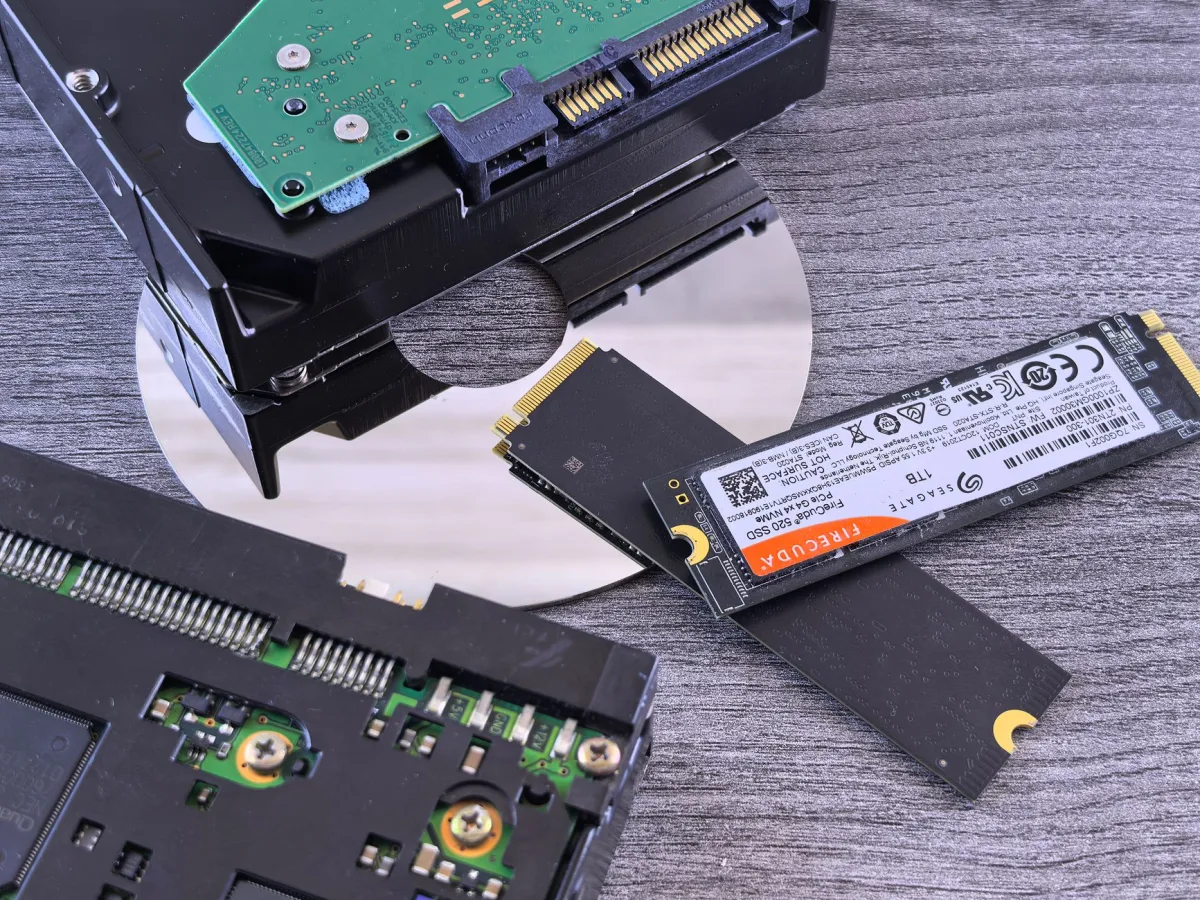
When I opened the box for the Starfield launch edition in March 2026, the 12‑second world‑load felt like a relic. Swapping the old SATA drive for a fresh NVMe model cut that time in half and made the whole system feel instantly snappier. If you’re ready for the same lift, this guide walks you through every decision, tool, and safety step you need to replace or add storage without losing data or voiding warranties.
“I thought I’d saved the day by cloning the drive, only to discover the new SSD was throttling at 30 °C. A tiny heatsink later, and my load times were back to lightning‑fast.” – A personal note from the field.
Quick Answer
Yes—you can upgrade your SSD in under an hour. Identify the right form factor, back up your data, install the new drive, update the BIOS, and verify performance with a few benchmarks.
What You’ll Learn
- Differences between 2.5‑inch SATA, M.2 SATA, and M.2 NVMe drives.
- How to verify compatibility on HP OMEN laptops, desktops, and Steam‑Deck‑style devices.
- Physical install, BIOS configuration, and data migration.
- Benchmarking methods to confirm real‑world speed gains.
When to Upgrade
Consider a new SSD if any of the following apply:
- Free space drops below 15 % of total capacity.
- Game load times regularly exceed 12 seconds on current titles.
- The system feels sluggish during Windows updates or large‑file transfers.
- Your warranty still covers the drive bay (most HP OMEN models list storage as user‑replaceable).
Why It Matters in 2026
Modern games stream compressed textures directly to the GPU, and AI features such as DLSS 3.0 read and write data continuously. An NVMe SSD with TLC NAND delivers the low latency and endurance needed for these workloads. QLC‑based drives may throttle under heavy write bursts.
PCIe 4.0 NVMe drives such as the Samsung 990 PRO reach up to 5,000 MB/s sequential reads and 4,200 MB/s writes. By contrast, SATA III tops out at 600 MB/s. The NVMe protocol also reduces latency to single‑digit microseconds, a decisive advantage for DirectStorage‑enabled games.
Choosing a drive that supports both PCIe 4.0 and PCIe 5.0 lets you keep the same SSD when you later upgrade the motherboard, protecting your investment.
Storage Evolution
Two decades ago SSDs were niche SLC devices. Today, the market offers a spectrum from budget QLC to performance‑grade TLC and even PCIe 5.0 models. Understanding the trade‑offs helps you match the drive to your workload.
Gaming & AI Demands
Titles like Cyberpunk 2077 and Starfield rely on DirectStorage to feed the GPU with assets without CPU bottlenecks. A drive that can sustain high I/O rates keeps frame times stable while textures load in the background.
Future‑Proofing
PCIe 5.0 SSDs are entering the mainstream, but most 2026 rigs still use PCIe 4.0. Selecting a drive that supports both generations lets you keep the same SSD when you later upgrade the motherboard.
Prerequisites & System Requirements
Check Your System Compatibility
Start by locating your exact HP OMEN model number. Download the service manual from HP Support and confirm the supported interfaces (M.2 NVMe, M.2 SATA, 2.5‑inch SATA) and maximum capacities. In Device Manager → Disk Drives you can see the current drive’s interface, which helps verify whether the existing slot is NVMe‑ready.
Tools & Software
- Phillips #0 screwdriver (or Torx T5 for some laptops).
- Anti‑static wrist strap.
- Backup utility – Acronis True Image (bundled with many Samsung drives) or a free alternative like Macrium Reflect.
- Firmware updater – Samsung Magician or WD Dashboard.
- Benchmark suite – CrystalDiskMark for raw speeds, PCMark 10 Storage for real‑world workloads, and 3DMark Storage Benchmark for gaming‑related I/O.
Backup Strategies
Never begin the upgrade without a verified backup. Clone the OS partition with Acronis True Image, then create a separate image of your data folders on an external USB‑C SSD. Verify the image boots in a virtual machine before you wipe the old drive.
Choosing the Right SSD
Form Factors: 2.5‑inch vs M.2
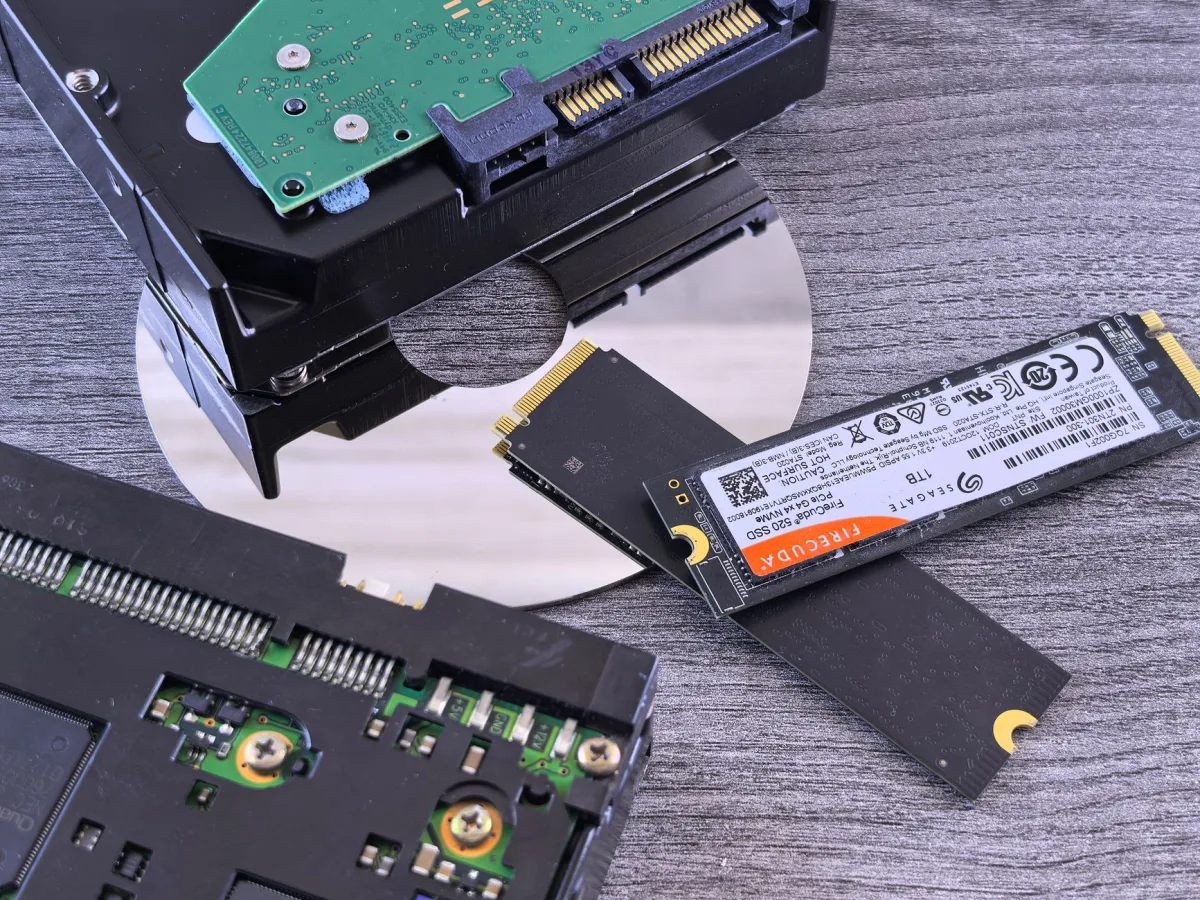
2.5‑inch SATA drives fit any notebook or desktop with a drive bay but are limited to 6 Gbps. M.2 slots come in several lengths – 2230, 2242, 2260, 2280, and 22110. Most HP OMEN laptops support 2280; the Steam Deck’s compact chassis only accepts 2230. Verify clearance under the bottom panel or GPU shroud before ordering.
SATA vs NVMe
SATA III draws roughly 2–3 W under load and is power‑efficient. NVMe drives use the PCIe bus, consuming 4–7 W for PCIe 4.0 models. In gaming benchmarks, an NVMe SSD can reduce level load times by 1.5–2 seconds compared with a high‑end SATA SSD.
NAND Types & Performance
| NAND Type | Typical Use‑Case | Endurance (TBW) | Speed Profile |
|---|---|---|---|
| TLC | OS & game installs | 300–1,200 TBW | High sequential, low latency |
| QLC | Bulk media storage | 150–400 TBW | Slower sustained writes |
For a primary game drive, TLC (found in Samsung 990 PRO and WD Black SN770) is the safe bet. QLC drives such as the WD Blue SN570 (PCIe 3.0 NVMe, QLC) work well for a secondary library where writes are infrequent.
Planning the Upgrade
Capacity vs Speed
Capacity alone does not guarantee speed. A 4 TB QLC drive may read slower than a 1 TB TLC model because the SLC cache fills quickly. Aim for a capacity that leaves 10–20 % free for over‑provisioning; this preserves performance and extends endurance.
Budgeting & Warranty
Most OEM SSDs include a five‑year warranty and free cloning software. Samsung 990 PRO typically retails around $150 for 1 TB, while the WD Black SN770 2 TB costs about $180 but offers a higher TBW rating. Weigh the price‑to‑performance ratio against your expected write volume.
Mapping Your Workloads
Gamers benefit most from low latency and high sequential reads. Content creators need strong sustained write speeds; a drive with a DRAM cache (like the Samsung 990 PRO) shines here. AI hobbyists who train models locally should prioritize higher‑endurance TLC drives.
How to Upgrade My SSD: Physical Install Steps
Preparing Your Workspace
Choose a clean, static‑free surface. Ground yourself with an anti‑static wrist strap and keep a small container for screws. Having a flashlight or a headlamp handy makes it easier to see the tiny M.2 notch.
Physical Installation
- Power down the PC, unplug the power cord, and press the power button for five seconds to discharge capacitors.
- Open the case or laptop bottom panel. On HP OMEN laptops, remove the two Phillips screws securing the SSD caddy.
- If installing an M.2 drive, align the notch with the socket, insert at a 30° angle, and press down until the screw hole aligns. Secure with the provided screw.
- For a 2.5‑inch SATA SSD, slide the drive into the SATA‑III bay and connect the SATA data and power cables (or use the caddy that routes the connectors automatically).
- Re‑assemble the chassis, reconnect power, and boot.
BIOS/UEFI Setup
Enter BIOS by pressing F2 (or Esc on some HP models) during POST. Verify the new drive appears under “Storage” or “NVMe Configuration”. Set the SATA mode to AHCI if it isn’t already – this maximizes throughput. Disable “Secure Boot” only if you plan to clone using a bootable USB; re‑enable it after migration.
Clean Windows Install (Optional)
If you prefer a fresh start, download the Windows 11 Media Creation Tool on a separate USB‑C stick, boot from it, and choose “Custom: Install Windows only”. Select the new SSD as the target, let the installer create the recommended partitions, and proceed. After installation, install chipset drivers from HP Support and the latest SSD firmware via Samsung Magician or WD Dashboard.
Data Migration Options
Two proven paths:
- Clone with Acronis True Image: Create a bootable rescue media, clone the old drive, then boot from the new SSD to verify. This preserves the OEM recovery partition.
- Manual Transfer: Use Windows’ “Backup and Restore (Windows 7)” to copy user folders, then reinstall applications. This yields a leaner system and eliminates legacy drivers.
Performance Tuning & Validation
TRIM & Defragmentation
Windows automatically issues TRIM commands. There is no need to run defragmentation; doing so adds unnecessary write cycles. Verify TRIM is active with fsutil behavior query DisableDeleteNotify – a result of “0” confirms it’s enabled.
Benchmarking Tools
Run CrystalDiskMark with a 1 GB test file and a queue depth of 32 to see peak sequential numbers. Expect the Samsung 990 PRO to hit ~5,000 MB/s read and ~4,200 MB/s write on a PCIe 4.0 platform. Follow with PCMark 10 Storage to simulate real‑world game loads; scores above 5,000 indicate “above‑par” performance for 2026 titles.
Optimizing Game Loads
Enable DirectStorage in Windows Settings → Gaming → DirectStorage. Most modern titles detect the feature automatically, but you can double‑check the game’s graphics settings panel for an “NVMe Optimized” toggle.
Common Mistakes & Troubleshooting
Drive Not Detected
Possible causes:
- Improper seating – reseat the M.2 module.
- BIOS version lacking NVMe support – update to the latest HP OMEN firmware.
- Wrong keying (B‑key vs M‑key) – ensure the drive matches the slot’s notch.
Boot Failures
If Windows won’t start after cloning, verify the boot order in BIOS and make sure the cloned partition is marked “Active”. A missing EFI system partition can be repaired with a Windows recovery USB by running bootrec /fixboot and bcdboot C:\Windows /l en-us /s X: /f UEFI.
Data Loss Scenarios
Always keep the original drive intact until the new SSD boots reliably. If accidental deletion occurs, use the manufacturer’s secure erase tool to wipe the old drive before disposal – this prevents forensic recovery.
Thermal Management
NVMe drives can throttle under sustained writes, especially in compact chassis. Adding a low‑profile heatsink (often supplied with high‑performance models) or ensuring adequate airflow with a case fan can keep temperatures below 70 °C, preserving both speed and endurance.
Who Is This Best For?
| Target Persona | Recommended Option | Key Reason & Real‑World Benefit |
|---|---|---|
| Gamers | Samsung 990 PRO 1 TB (PCIe 4.0 NVMe, TLC, DRAM‑cached) | Peak reads ~5 GB/s, low latency, excellent PCMark 10 scores—fastest level loads. |
| Content Creators | WD Black SN770 2 TB (PCIe 4.0 NVMe, TLC) | Strong sustained writes, DRAM‑less design keeps cost down while handling 4K video editing. |
| Everyday Users | WD Blue SA510 1 TB (SATA‑III, TLC) | Budget‑friendly, sufficient for OS and moderate game library, low power draw. |
| Tech Enthusiasts | Samsung 990 PRO + aftermarket heatsink | Future‑proof for PCIe 5.0 upgrades, thermal stability under long writes. |
Future Upgrade Tips
When your motherboard supports PCIe 5.0, consider swapping the Samsung 990 PRO for a PCIe 5.0 drive such as the Samsung 990 PRO (PCIe 5.0 variant) to double bandwidth. Keep an eye on emerging DRAM‑less NVMe models that use Host Memory Buffer (HMB) to cut costs without sacrificing latency.
Final Verdict & Next Steps
Key Takeaways
- Identify the exact HP OMEN model and supported SSD form factors.
- Prefer M.2 NVMe TLC drives for gaming; SATA III TLC is acceptable for bulk storage.
- Leave 10–20 % free space for over‑provisioning.
- Update BIOS and SSD firmware before first use.
- Validate performance with CrystalDiskMark and PCMark 10.
Recommended Resources
- HP OMEN SSD Upgrade Guide – official HP support page.
- Samsung Magician – firmware and health monitoring.
- WD Dashboard – cloning and performance tuning.
- PCMark 10 Storage Benchmark – real‑world gaming I/O test.
Armed with the right drive, a solid backup plan, and a few minutes of careful installation, you’ll feel the difference the moment you launch the next game. Happy upgrading!